

The Left-Back Brain Trust: How Chivu’s “thin-CV” staff made Inter’s 2025/26 Double feel inevitable
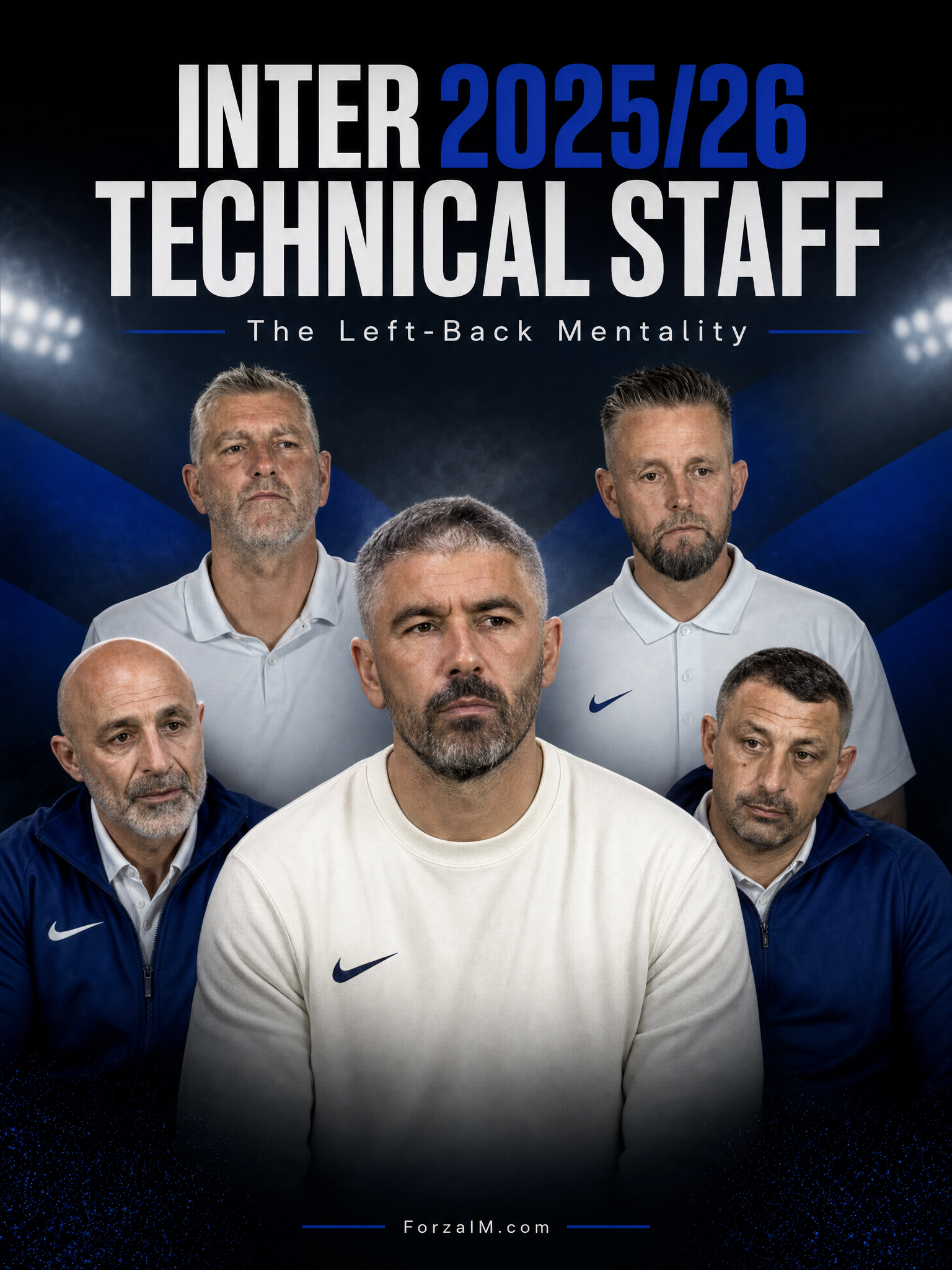
Inter’s decision to appoint Cristian Chivu for 2025/26 was always going to be interpreted through one lens: experience. Or, more precisely, the perceived lack of it. At a club where the margin for error is traditionally measured in headlines, not halves, a coach stepping into the role without a long senior track record inevitably invited questions.
Chivu did not answer them with a star-studded technical staff designed for optics. He answered them with a staff built on trust, shared football principles, and a very specific kind of personality: the kind that values responsibility over spotlight.
The result speaks louder than the debate ever could. Inter finished the season with a domestic double adding the Coppa Italia to the Scudetto.
A staff that looked “light” — until it started functioning like a machine
Inter publicly confirmed Chivu’s technical staff at the start of the project, naming Aleksandar Kolarov as assistant coach and Angelo Palombo among the technical assistants, alongside an experienced performance and goalkeeping structure.
It was an appointment list that split opinion because it challenged a familiar assumption: that stability at a top club must come from a bench packed with veteran coaches.
Instead, Inter leaned into a different model:
a head coach who knows the club’s demands from the inside,
a deputy with elite-level credibility as a player and a fresh, aggressive start in coaching,
and technical staff chosen for fit and function, not for reputations.
That last point matters. Big clubs don’t fail solely because tactics are wrong; they fail because daily standards slip, messages get diluted, and decision-making becomes political. Chivu’s staff was designed to keep the message clean.
The Walter Samuel near-miss that clarified the path
Early on, Chivu’s preferred assistant was Walter Samuel — a name that, in Inter circles, needs no marketing. Samuel ultimately declined.
The reason was straightforward and publicly explained: Argentina head coach Lionel Scaloni confirmed Samuel turned down Inter because of his commitment to the national team’s staff.
That “no” became a defining moment. It forced Inter and Chivu to decide what they were really building: a traditional hierarchy anchored by an established lieutenant, or a staff shaped around alignment and development.
They chose alignment.
Kolarov: the appointment that looked like romance, but played like structure
Kolarov’s return to Inter as assistant coach was easy to label as nostalgia. It wasn’t. The timing and context tell a more serious story.
Reports note that Kolarov had already begun coaching with Serbia’s U21 national team and left after a short spell, five games, to accept Inter’s offer. The same reporting also references his brief post-retirement experience in a front-office capacity at Pisa.
It is not a long apprenticeship, and it doesn't claim to be. But it does fit the kind of high-pressure learning curve Inter were willing to back: smart football people, accelerating inside an elite environment, supported by a broader staff with seasoned conditioning and goalkeeping expertise.
In other words: Inter did not bet the season on inexperience. They bet the season on a coherent structure.
Palombo: continuity in Chivu’s working method
Angelo Palombo’s presence is another detail that reads differently when you place it in the right context. Palombo wasn’t an out-of-nowhere appointment; he was part of Chivu’s broader staff choices at senior level before. Reuters’ reporting on Chivu’s earlier senior coaching role at Parma noted Palombo as his technical assistant.
That is how modern coaching teams are often built: not by collecting résumés, but by assembling people who already share language, workflow, and standards. It is less glamorous — and frequently more effective.
Additional reporting on Chivu’s staff at Inter also highlighted the presence of familiar faces and the broader makeup of the coaching group.
The symbolism Inter didn’t plan, but benefitted from: two former left-backs leading a double
There is an irony and a beauty in how this season reads.
Chivu and Kolarov are not “poster boy” profiles. They come from roles historically built on discipline, timing, and suffering without applause. Full-backs learn to read danger, manage space, and take responsibility for what happens behind them. That mindset translates.
Inter’s 2025/26 story is not just that Chivu won in his first season. It’s how the club won: by backing an internal identity and trusting a staff that could carry pressure without performing for it. And that’s why the double feels more than a trophy count. It feels like a statement of culture.
Inter didn’t just hire a coach. They hired an idea: that clarity beats clout, and that the right people, even early in their coaching lives, can lead at the highest level when the structure around them is strong and the message is consistent.
By season’s end, the doubts were still there in the archive. The trophies were in the cabinet.
Comments (0)
Sign in to join the discussion