

Zanetti’s “Family” Doctrine: Chivu, Pio, Dimarco, Stanković — and Lautaro as Inter’s Non‑Negotiable
Some clubs win and then immediately start arguing about who deserves the credit.
Inter, for once, did the opposite — and Javier Zanetti says that’s exactly why the season ended with trophies.
Because Javier Zanetti just gave you the cleanest internal message you’ll hear all summer: Chivu is one of us, the kids are being watched like assets and like sons, and Lautaro isn’t a player anymore — he’s a symbol you don’t touch.
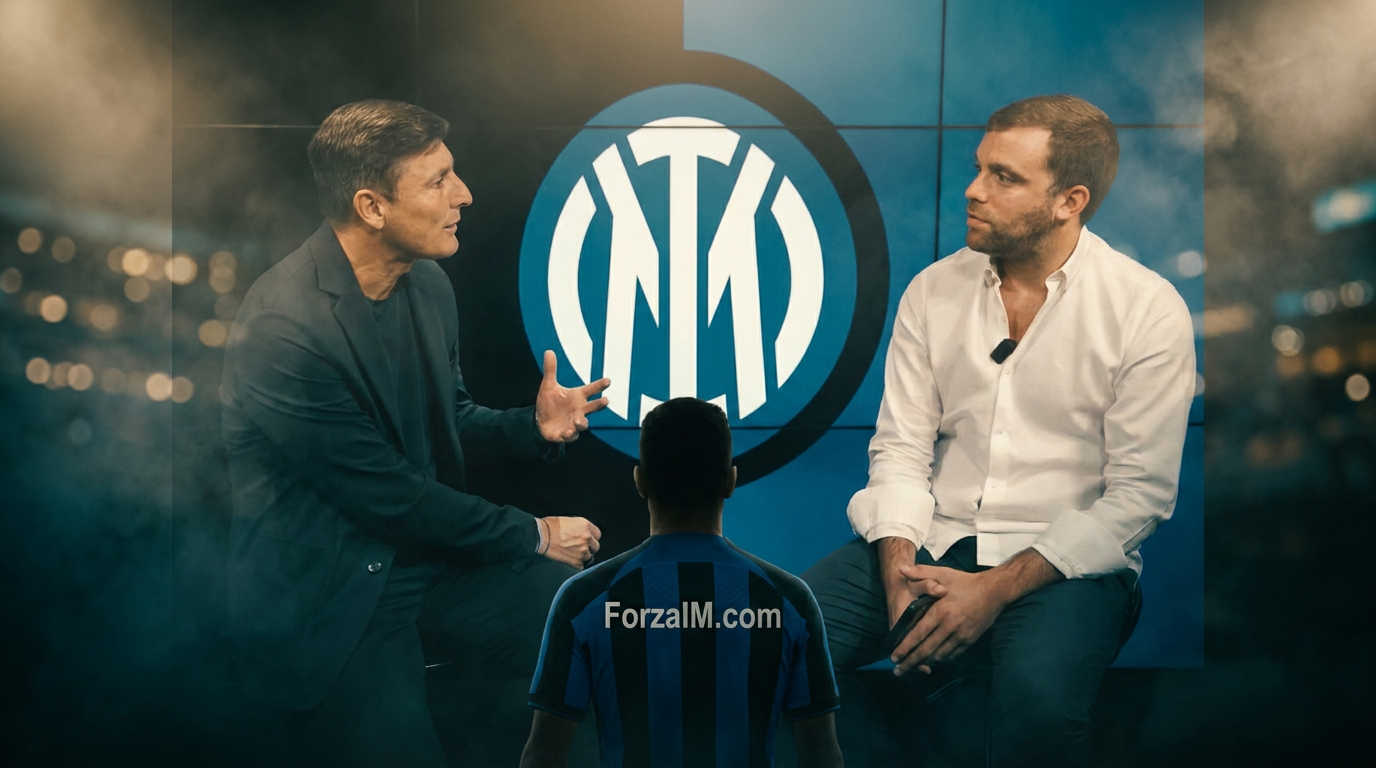
Speaking to Fabrizio Romano in an interview published by FCInter1908, Inter’s vice-president praised Cristian Chivu’s work and the calm the club kept when the season inevitably hit its rough patches.
Zanetti called the choice of Chivu “the best” because he is “one of the family,” someone who knows the environment, transmits Inter’s DNA, and understands what the Interisti demand.
“He answered like a prepared man”
One of the most interesting points wasn’t tactical — it was leadership.
Zanetti said he expected Chivu to handle the role, including communication, because he already knew his intelligence and his background work in Inter’s youth system. In Zanetti’s words, even when circumstances weren’t simple, Chivu always looked “up to it” in press conferences.
That matters. At Inter, the microphone can be as heavy as the shirt.
He also highlighted Chivu’s natural ability to connect with the squad — the way he talks to players, transmits ideas, and keeps everyone involved. That “approach with the boys,” Zanetti said, is a real gift.
The post-Club World Cup fracture: “We fixed it like men”
Every winning season has a moment where the wheels wobble.
Zanetti referenced the tense episode involving Lautaro Martínez and Hakan Çalhanoğlu after the Club World Cup, calling it a moment that ultimately helped Inter restart.
The key line: they dealt with it “da uomini” — man to man — which he framed as the first requirement of a real group.
From there, he said, the club backed the chosen path with Chivu, and that unity became the base of the “great season.”
Pio Esposito: talent is one thing, humility is another
Zanetti also spoke about Pio Esposito — a rare modern story: a young player who isn’t instantly shipped out the moment his market value starts blinking.
He praised Pio’s growth and noted that, in Italian football culture, giving young players space isn’t easy. The club, however, had the conviction that Pio could deliver — and the player matched it with intelligence, humility, and a constant desire to learn.
Dimarco among the best: production + continuity
On Federico Dimarco, Zanetti stopped short of the “best in the world” label — but put him firmly in the elite.
He pointed to the full package: goals, assists, the “magical” left foot, and above all continuity.
And there’s a sentimental layer too: Zanetti underlined what it means for Inter to have a player who grew up wearing that shirt, came through the academy, and still looks like an Interista first and a footballer second.
Stankovic “ready” — and “family”
The vice-president also spoke warmly about Aleksandar Stankovic’s path.
Zanetti said he did well in Inter’s youth teams, and that moving abroad and proving himself showed personality. He described him again as “family” — the recurring theme of the interview.
Lautaro: the deal done “in days,” the bond built over years
Then there’s Lautaro Martínez — the captain who doesn’t feel “imported” anymore.
Zanetti recalled how quickly Inter had to move when the opportunity opened in Argentina, working with Piero Ausilio to close the operation. He stressed that when you sign a young South American, you don’t judge him only for the immediate return — you project what he’ll be in 4–5 years.
And then the punchline: Lautaro “went beyond expectations,” not for ability, but for belonging — always involved, wanting to stay, happy in Milan with his family.
Zanetti’s view is simple: finding a player who publicly wants to stay forever is rare — and priceless.
“Inter competitive” — because the base is solid
On the market and next season’s expectations, Zanetti’s message was classic Inter pragmatism.
He said he expects an Inter that wants to defend what it has won, go as far as possible in the Champions League, and remain competitive — noting that Inter winning with three different coaches in recent years proves there is a strong, solid base.
ForzaIM take
Zanetti’s interview is basically a manifesto: identity + calm + competence.
It’s not romantic. It’s operational.
When Inter stopped looking for scapegoats and started acting like a club, the trophies followed.
Comments (0)
Sign in to join the discussion